
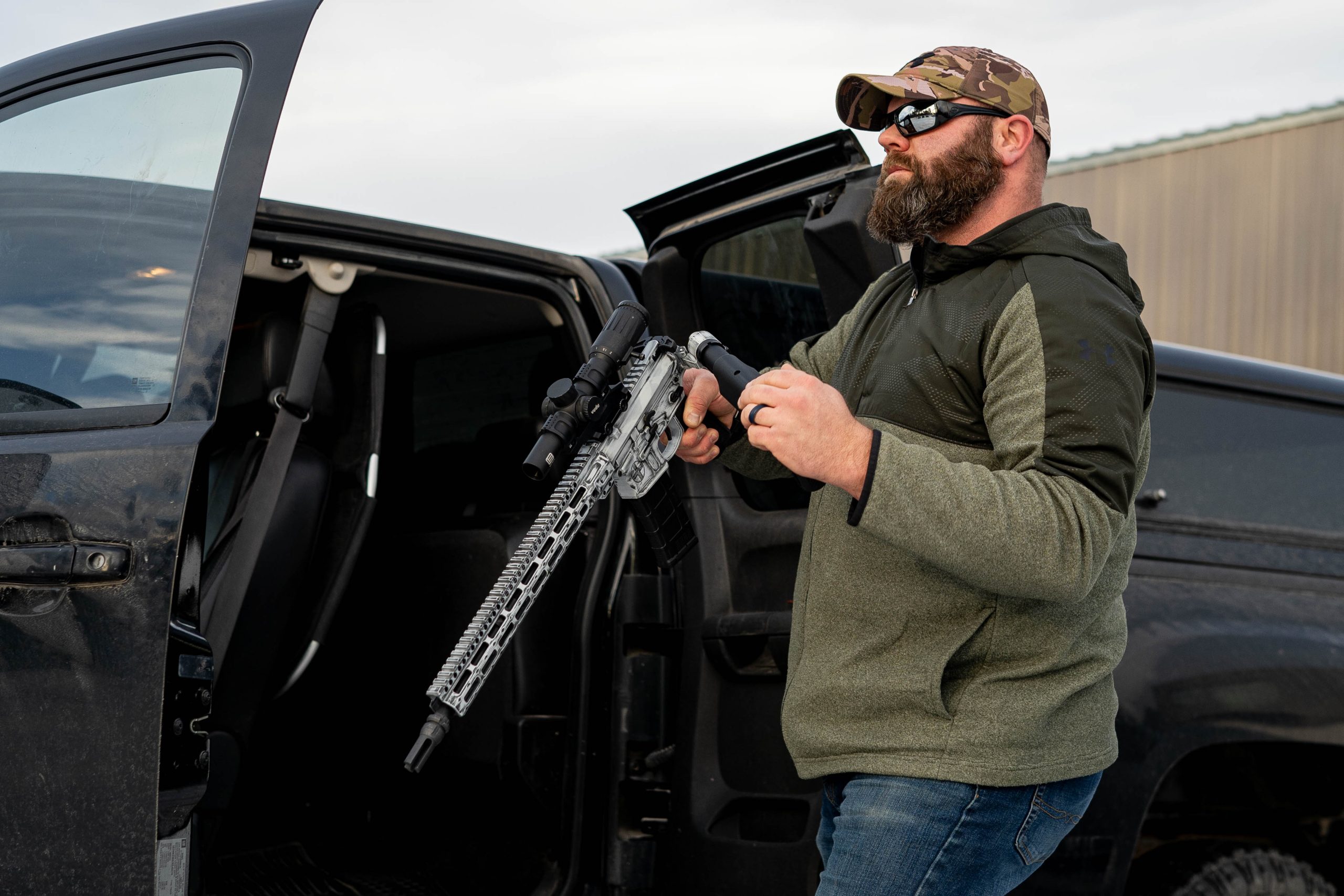
The Ultimate Truck Gun: How to Set Up a Rifle for Real-World Vehicle Use
The Best Truck Gun: What Actually Works (And What Doesn't)
Every truck gun article eventually gets around to saying the same thing: "it depends on your situation." And that's true. But it's also a cop-out that avoids the harder, more useful question—what does a well-thought-out truck gun setup actually look like when you commit to getting it right?
We spend a lot of time thinking about this. Our products live in this space. And after looking at how real people in real situations actually use vehicle-stored firearms—ranchers, backcountry hunters, long-haul drivers, rural residents—a clear picture of what the best truck gun setup looks like starts to emerge. This is that picture.
What Makes a Truck Gun Different From Every Other Firearm You Own
Your truck gun isn't your home defense gun. It isn't your range gun. It isn't your competition setup. It fills a specific role that none of those other firearms cover: accessible, vehicle-stored firepower that can handle situations your EDC pistol can't.
That role comes with specific constraints that shape every decision downstream:
It has to fit—and not just in storage. This sounds obvious until you start measuring. A standard AR-15 with a 16" barrel is 35+ inches long with the stock extended. That doesn't live in a center console, under a seat, or in any discreet vehicle storage. But the problem isn't just where it sits when you're not using it—it's what happens when you actually need it. A full-length rifle inside a truck cab is unwieldy to the point of being dangerous. You're fighting the headliner, the door frame, the steering wheel, and your own seatbelt just to get the gun oriented. If you've ever tried to maneuver a 35"+ rifle in a cab under any kind of stress, you understand immediately why length isn't just a storage problem—it's a deployment problem. The best truck gun configurations are built around a realistic folded or stored length—something in the 20-22" range—precisely because that size works in the truck, not just next to it.
It has to be ready. A truck gun you have to assemble under stress isn't a truck gun—it's a parts kit. Whatever you choose needs to go from stored to deployed in seconds, not minutes. This is where folding mechanisms earn their money, and where the difference between a well-engineered fold and an adapter-based workaround starts to matter.
It has to be reliable without attention. Your truck gun might sit for weeks between range trips. It'll see temperature swings, vibration, dust, and the occasional neglect. Unlike your competition gun that gets cleaned after every match, your truck gun need
s to work when you've half-forgotten it exists.
It has to be capable enough to matter. This is the one most people underweight. There's a real difference between a solution that technically fills the "truck gun" checkbox and one that's actually capable across the range of scenarios you might face—extended distances, vehicle threats, large predators in big country. Caliber selection isn't just a technical choice; it's a practical one.
Caliber: The Decision That Shapes Everything Else
The caliber question for truck guns usually comes down to three realistic options: pistol caliber, 5.56 NATO, or larger rifle cartridges. Each makes sense for a different use case.
Pistol caliber carbines (9mm, .40, .45) offer real advantages: manageable noise in a vehicle context, lower recoil for faster follow-up shots, and ammunition commonality with a sidearm. For urban or suburban use cases where distances are short and the threat profile is human, a pistol-caliber carbine is a legitimate choice. The Shield Arms SA-9 is exactly this kind of build—9mm, folding lower receiver, genuinely compact, and capable for close-range work. If your truck gun scenario is primarily about a step-up from your EDC at shorter distances, a folding PCC like the SA-9 is worth serious consideration.
5.56 NATO is where most serious truck gun builds end up, and for good reason. At practical vehicle engagement distances, 5.56 from a short barrel (10.5" to 14.5") delivers real terminal performance that pistol calibers can't match. It reaches farther. It hits harder. And in a rural context—where threats might be two-legged or four-legged, close or at distance—that matters. The SA-15 Folding 11.5" Pro Pistol is what an honest 5.56 truck gun build looks like: 11.5" barrel, folded to 20.5" total length, under 6 lbs, built on a folding lower that doesn't add weight or length through adapter engineering.
Larger rifle cartridges (.308, 6.5 Creedmoor) make sense for specific contexts—ranch use where you might need to engage threats at 300+ yards, or predator control in genuinely open country. The tradeoff is size, weight, and noise. For most truck gun use cases, they're more than necessary.
The honest answer for most people in most situations: if you're primarily in urban or suburban environments, a pistol-caliber folder is practical and capable. If you're covering rural ground, hunting country, or want a single solution that handles the full threat spectrum, 5.56 from a compact folding platform is the best truck gun caliber for the job.
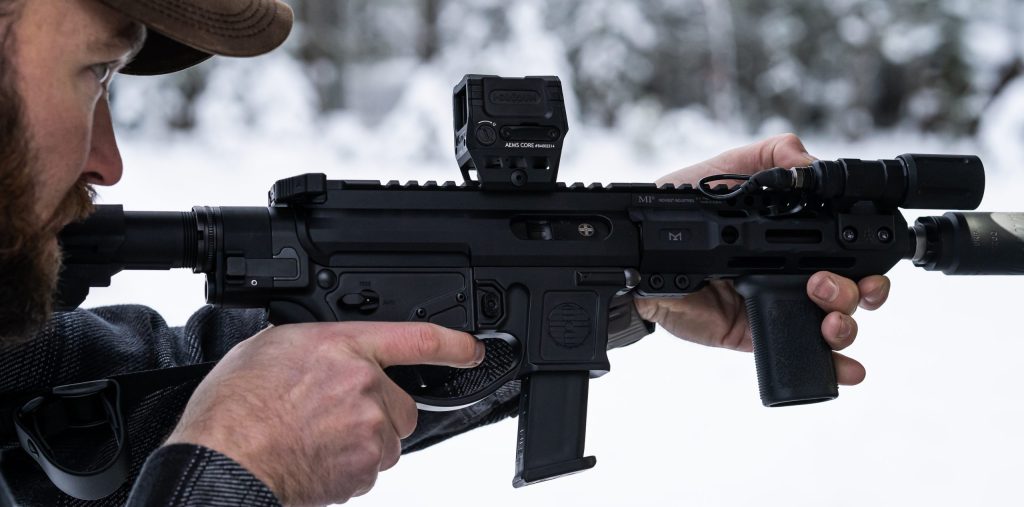
Barrel Length: Short Enough to Matter, Long Enough to Work
Barrel length on a truck gun is a real engineering tradeoff, not just an aesthetic choice.
Go too short—under 10 inches—and you start fighting the carbine gas system. Reliability becomes more finicky. Velocity drops enough to affect terminal performance with some loads. The blast and flash signature increases substantially, which matters if you're shooting in or around a vehicle.
Go too long—16 inches—and you've given up the size advantage that makes a truck gun viable in the first place. A 16" barrel with a standard stock puts you well north of 35" overall, which isn't just hard to store—it's nearly impossible to use effectively inside a vehicle cab. You can't bring a gun that length to bear from a seated position without it catching on the dash, the door, the ceiling, or the seat back behind you. In a real scenario, that matters enormously.
The sweet spot for most 5.56 truck gun builds is 11.5" to 13.9". That range keeps you in carbine-gas territory (more reliable than pistol-length gas on a short barrel), maintains meaningful velocity, and keeps the overall package compact. The SA-15 Pro Pistol's 11.5" 4150 CMV barrel with a carbine-length gas system and .070" gas port sits right in this range—the result of actually thinking through the tradeoffs rather than splitting the difference arbitrarily.
An adjustable gas block, like the one spec'd on the SA-15, is worth having on any serious truck gun build. It lets you tune for suppressor use, adjust for different ammunition loads, and keep the gun running when conditions aren't ideal.
The Folding Question: Why Most Folding AR Builds Get It Wrong
If you've looked at folding AR builds before, you've probably seen the standard approach: take a normal AR lower, add a folding adapter between the lower and buffer tube, and call it done. This works, technically. But it comes with real costs.
A folding adapter adds length—typically around an inch—to the receiver package. It adds weight. It requires a modified or captured carrier because the BCG can't cycle when folded. And it introduces an additional mechanical interface that can come loose, wear, or fail.
The better approach is what Shield Arms spent years engineering into their Folding Lower Receiver: a folding mechanism built directly into the lower receiver itself. No adapter, no added length, no carrier modification, no extra failure points. The SA-15 folds at the lower receiver, collapses to 20.5" total, and deploys instantly—the same motion every time, with no extra steps and no adapter engineering to go wrong.
That's the difference between solving the truck gun size problem and working around it.
No Tax Stamp Cost: The AR Pistol Advantage (And the SBR Option)
This one is worth saying plainly, because it's a real consideration that shapes how you build.
The SBR route — a short barrel under 16" with a traditional stock — used to come with a $200 tax stamp cost on top of the NFA process. That $200 fee is now gone. If you want a traditional stock on your short-barreled truck gun, you can pursue an SBR stamp for free. What hasn't changed is the process itself: ATF wait times, registration, and the requirement to notify or get approval before transporting across state lines. For a truck gun that travels with you, that interstate friction is worth factoring in.
The AR pistol route skips the process entirely. The SA-15 11.5" Pro Pistol ships configured with an SB Tactical SBA3 brace — no stamp, no wait, no registration, no compliance steps when you cross state lines. Transfer through your FFL and you're running. Same 11.5" barrel, same 5.56 NATO capability, none of the NFA overhead.
If you want a traditional stock and don't mind the paperwork, the free stamp makes the SBR route more accessible than ever. If you want the truck gun in your hands immediately with no process attached, the AR pistol is the faster, simpler path — and it's how the SA-15 is built from the factory for exactly that reason.
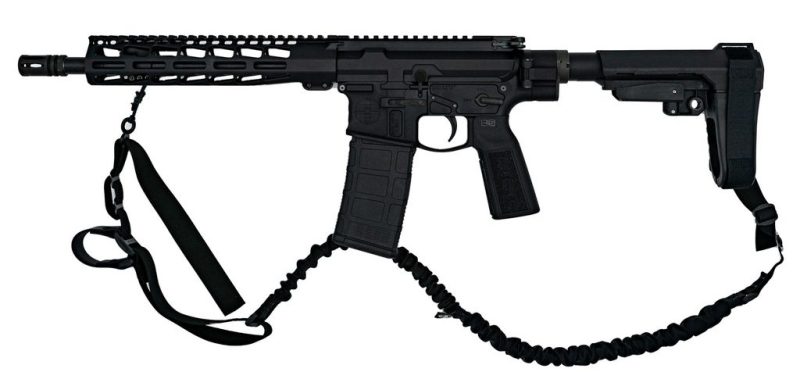
The Complete Best Truck Gun Setup
A truck gun is a system. The firearm is the center of it, but the gear around it determines whether the whole thing actually works.
The Firearm: A compact, folding 5.56 platform in the 11.5"–13.9" barrel range. Built on quality components—7075-T6 billet receivers, MPI-inspected BCG, adjustable gas block. The SA-15 11.5" Pro Pistol is the benchmark here. Everything else is either a compromise in different directions or a legitimate alternative for a different use case (like the SA-9 if you're prioritizing pistol-caliber compactness).
Storage: A quality steel lockbox, cable or bracket-mounted to your vehicle. At 20.5" folded, the SA-15 fits in under-seat storage options that a standard AR can't touch. The lockbox keeps it secured, legal, and inaccessible to anyone who shouldn't have it. Measure your storage space before you buy—the folded dimension is what matters, and it varies significantly between platforms.
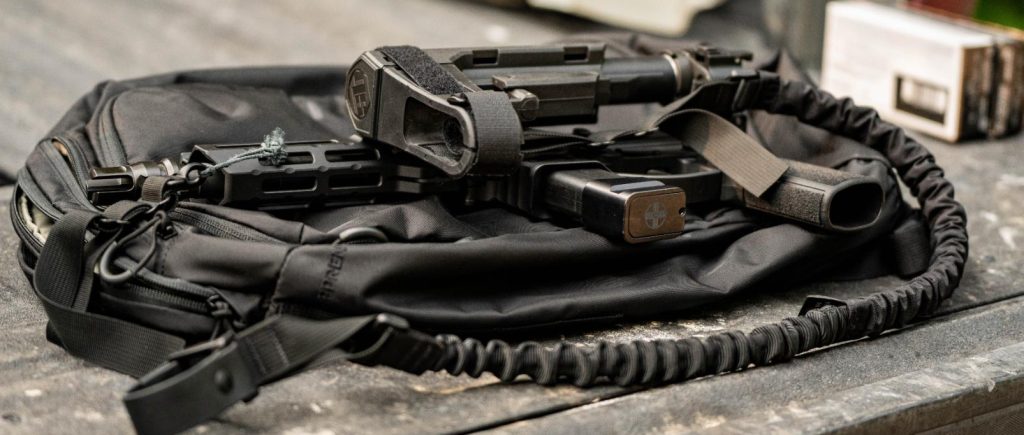
Go-Bag: The Bang Bag is what lives alongside the gun — extra magazines, medical supplies, a light, and whatever else belongs in a compact grab-and-go setup. Laser-cut MOLLE, magnetic closure, made in Montana. It's not a gun bag; it's the support kit that makes the whole system actually useful when you grab it and go.
Sling: Once the gun is out of the truck, a good sling is the difference between controlled movement and fumbling with a loose rifle. The Mountain Partisan Sling runs a two-stage progressive tension system with a quick-adjust and a high-temp Kevlar loop. Designed by a former Green Beret. It's what we run on our folding platforms because it handles the transitions that matter in a vehicle context.
Optic: For most truck gun scenarios, a compact red dot covers 0–200 yards cleanly and keeps the package light and fast to deploy. If your use case extends to distance—open country, ranch work, hunting scenarios—a 1-4x or 1-6x LPVO adds meaningful capability without breaking the compact profile.
Magazines: Keep a handful of loaded PMAGs with the gun. 30-rounders store efficiently alongside a folded platform. If you're running any Shield Arms PMAG extensions, the +5 adds capacity without changing the storage footprint meaningfully.
Common Truck Gun Mistakes (And How to Avoid Them)
Grabbing a full-size AR from the safe and calling it a truck gun. A 16" AR with a full stock is a great rifle. It's a terrible truck gun. Beyond the storage problem, it simply doesn't work in the confined geometry of a vehicle cab—the length fights you at every step. If this is your current truck gun plan, it's worth revisiting before you need to find out the hard way.
Underestimating the size problem. Measure your actual storage space before you buy anything. A truck gun that doesn't fit your truck isn't a truck gun—it's a frustration.
Skipping the break-in and function testing. Your truck gun needs to have rounds through it before it goes in the vehicle. You need to know it runs your specific ammunition reliably. Don't let it sit untested.
Neglecting the storage solution. A loose firearm bouncing around in your truck is a safety issue, a theft risk, and in many states a legal one. A quality lockbox is part of the build, not optional.
Picking caliber for the wrong reasons. Smaller isn't always better, and bigger isn't always more capable. Match the caliber to your realistic use case, not to what sounds impressive at the range.
The Bottom Line
The best truck gun is the one that actually fits your truck, deploys when you need it, hits hard enough to matter, and holds up through neglect and weather without flinching. That's a specific set of requirements—and it points toward a compact, folding 5.56 platform as the answer for most people in most situations.
What it looks like in practice: a quality folding build in the 11.5"–13.9" barrel range, stored in a secure lockbox, ready to deploy in seconds, and paired with a good sling and carry bag for when it needs to move. That's the setup. Build it once, build it right, and don't think about it again until you need it.
Shop SA-15 Folding Pistols | Shop SA-9 Folding PCC | Shop Truck Gun Accessories
Best Truck Gun FAQ
What is a truck gun?
A truck gun is a firearm stored in a vehicle for use in situations where your EDC handgun isn't sufficient—extended distances, vehicle threats, dangerous animals, or remote locations far from help. The best truck gun setups balance compact storage, fast deployment, and meaningful capability.
What caliber is best for a truck gun?
For most use cases, 5.56 NATO from a compact barrel (11.5"–13.9") is the best truck gun caliber. It reaches farther and hits harder than pistol calibers while remaining controllable and compact. Pistol-caliber carbines like the SA-9 in 9mm are a legitimate alternative for primarily urban or close-range scenarios.
What's the ideal barrel length for a truck gun?
11.5" to 13.9" hits the practical sweet spot for a 5.56 truck gun. Short enough to fold down to a storable length, long enough to run a carbine-gas system reliably and maintain meaningful velocity.
How should I store a truck gun in my vehicle?
In a quality steel lockbox, secured to the vehicle by cable or bracket mount. Follow all applicable state and local laws for transport and storage. Always keep it locked when unattended.
Is an AR pistol or SBR better as a truck gun?
Both are legitimate options, and the right choice depends on how much process you want to deal with.
The good news for SBR fans: the tax stamp is now free. The $200 fee that used to be the primary deterrent is gone. If you want a traditional stock on your short-barreled build, you can pursue the SBR route without the cost. What you can't avoid is the process — ATF wait times, registration, and the requirement to get prior approval before transporting across state lines. For a truck gun that might travel with you regularly, that interstate compliance piece is worth thinking through carefully.
The AR pistol route — which is how the SA-15 11.5" Pro Pistol ships, configured with an SB Tactical SBA3 brace — skips the process entirely. No wait, no registration, no permission slip to cross state lines. You transfer through your FFL and you're done. Same short barrel, same capability, none of the NFA friction.
If you're comfortable with the SBR process and want a traditional stock, the free stamp makes it more accessible than ever. If you'd rather skip the paperwork altogether and get your truck gun running immediately, the AR pistol configuration is the faster path.
What's the difference between a folding adapter and a purpose-built folding lower?
A folding adapter bolts between the lower receiver and buffer tube, adding length, weight, and a modified carrier requirement. A purpose-built folding lower like the Shield Arms FLR integrates the hinge directly into the receiver—no adapter, no added length, no carrier modification, no extra failure points.


Glock 43X / 48 Metal Magazines and Metal Mag Releases: Ensuring Reliability
Glock 43X / 48 Metal Magazines and Metal Mag Releases: Why Both Are Essential
Quick Answer
Metal magazines like the S15 and Z9 require a metal magazine release to function reliably. Using a plastic mag release with metal magazines causes premature wear, feeding failures, and potential safety issues. The metal-on-metal combination ensures consistent performance, protects your frame, and maximizes the 50% capacity advantage these magazines offer.
The Problem: Why Your Aftermarket Magazine Might Be Failing
Experiencing failures to feed with your S15 or Z9 magazine? Random magazine drops during shooting? The culprit is often a mismatch between your metal magazine and plastic factory mag release.
Aftermarket metal magazines offer significant advantages for Glock 43X and 48 owners:
- 50% increased capacity (15 rounds vs. 10 rounds)
- Superior durability for high-volume shooting
- Enhanced reliability under demanding conditions
But these benefits only materialize when paired with the correct magazine release system.
Why Metal Magazines Need Metal Mag Releases
The Engineering Reality
Metal magazines like the S15 and Z9 are rigid by design. Unlike polymer magazines that flex slightly under pressure, metal magazines maintain their exact dimensions. When this rigid metal surface repeatedly impacts a plastic mag release, three problems occur:
- Stress concentration - All force focuses on a small plastic contact point
- Progressive wear - The plastic deforms, chips, or wears smooth over time
- Tolerance creep - Worn plastic creates inconsistent magazine positioning
Result: Failures to feed, unreliable magazine drops, and potential frame damage.
How Metal-on-Metal Systems Work Better
A metal mag release paired with a metal magazine creates:
- Consistent engagement geometry - No deformation or wear patterns
- Even stress distribution - Metal withstands impact without flexing
- Precise tolerances - Maintains proper magazine-to-chamber alignment
- Long-term reliability - Performance doesn't degrade with use
Key Benefits of the Metal Magazine + Metal Release System
Enhanced Feeding Reliability
Metal-on-metal contact ensures your magazine locks in the exact same position every time, maintaining consistent cartridge presentation to the chamber. This eliminates feed angle variations that cause malfunctions.
Extended Component Lifespan
Metal components resist wear even after thousands of magazine changes. Competitive shooters and high-volume trainers report no degradation after thousands and thousands of rounds—backed by our lifetime warranty and Spring for Life guarantee.
Maintained Precision Tolerances
Unlike plastic that can wear significantly over time, metal maintains factory specifications indefinitely, ensuring reliable function throughout your firearm's lifetime.
Addressing Common Questions
"Why not use a metal magazine with a plastic front cover?"
This seems like an ideal compromise—keeping your factory plastic mag release while gaining metal magazine benefits. However, this design has critical limitations:
The Support Structure Problem
Standard Glock OEM magazines use a fully-supported design: polymer completely surrounds an internal metal shell, distributing stress across the entire structure.
Metal magazines with plastic fronts use an unsupported design: a thin plastic face sits directly against rigid metal, with no support structure behind it. When the mag release engages, all force concentrates on this unsupported plastic interface.
"My factory Glock magazines work fine with the plastic release"
Correct—because OEM Glock magazines are engineered differently:
| Feature | OEM Glock Mags | Metal Mags w/ Plastic Front | Full Metal Mags + Metal Release |
|---|---|---|---|
| Support structure | Polymer fully wraps metal shell | Plastic face, rigid metal body | Solid metal throughout |
| Stress distribution | Even across entire surface | Concentrated at contact point | Even metal-to-metal contact |
| Flex characteristics | Slight give under pressure | Rigid—no flex available | Rigid—no flex needed |
| Long-term durability | Excellent for 10-round design | Degrades with use | Maintains performance indefinitely |
| Capacity | 10 rounds (43X/48) | 15 rounds | 15 rounds |
The OEM design works because the polymer component can flex slightly and is supported from behind. Metal magazines eliminate this flexibility—which is why the release must also be metal.
The Cost-Benefit Analysis
Initial Investment
- Metal magazine: ~$40 depending on model
- Metal mag release: $12
- Many combo options available to save money
Long-Term Value
- No replacement costs from worn components
- Consistent reliability across many thousands of rounds
- 50% capacity increase (5 additional rounds in S15 mags)
- Enhanced durability for carry and competition use
- Frame protection prevents costly repairs
- Peace of mind with our lifetime warranty
Frequently Asked Questions
Q: Can I use one metal magazine with my factory release temporarily?
A: While it may function short-term, even limited use accelerates plastic wear. Install the metal release before regular use.
Q: Will a metal release work with my factory Glock magazines?
A: Probably, however plastic frame tolerances can vary, and a steel mag catch will cause accelerated wear on plastic mags.
Q: How do I know when my plastic release is worn?
A: Signs include: magazines dropping unexpectedly, difficulty seating magazines, inconsistent lock-up feel, or visible wear/deformation on the release surface.
Q: Do I need to replace both the magazine and release together?
A: Yes. Metal magazines should always be paired with metal releases from the start to prevent damage and ensure reliability.
Q: Are there any downsides to the metal-on-metal system?
A: The only "downside" is the initial investment in both components. Performance-wise, metal-on-metal is objectively superior.
Conclusion: An Engineering Solution, Not a Limitation
The requirement for a metal magazine release with metal magazines isn't a design flaw—it's an intentional engineering solution that maximizes reliability, durability, and performance.
For Glock 43X and 48 owners seeking:
- Maximum capacity (15 vs. 10 rounds)
- Proven reliability under demanding conditions
- Long-term durability for thousands of rounds
- Consistent performance in carry and competition
The metal magazine and metal release combination delivers results that compromise solutions cannot match.
Ready to Upgrade?
Step 1: Choose your metal magazines:
- S-Series magazines (S10, S15, S20, S30) - For Glock 43X, 48
- Z-Series magazines (Z8, Z9) - For Glock 43
- DS-Series magazines (DS18, DS20) - For Glock 26, 19, 17 families
Step 2: Select a compatible metal mag release
Step 3: Follow manufacturer installation instructions
Step 4: Function test thoroughly before carry or competition use
Questions about compatibility or installation? Contact our support team or consult a qualified gunsmith for professional assistance.
All Shield Arms magazines are backed by our lifetime warranty and Spring for Life guarantee.

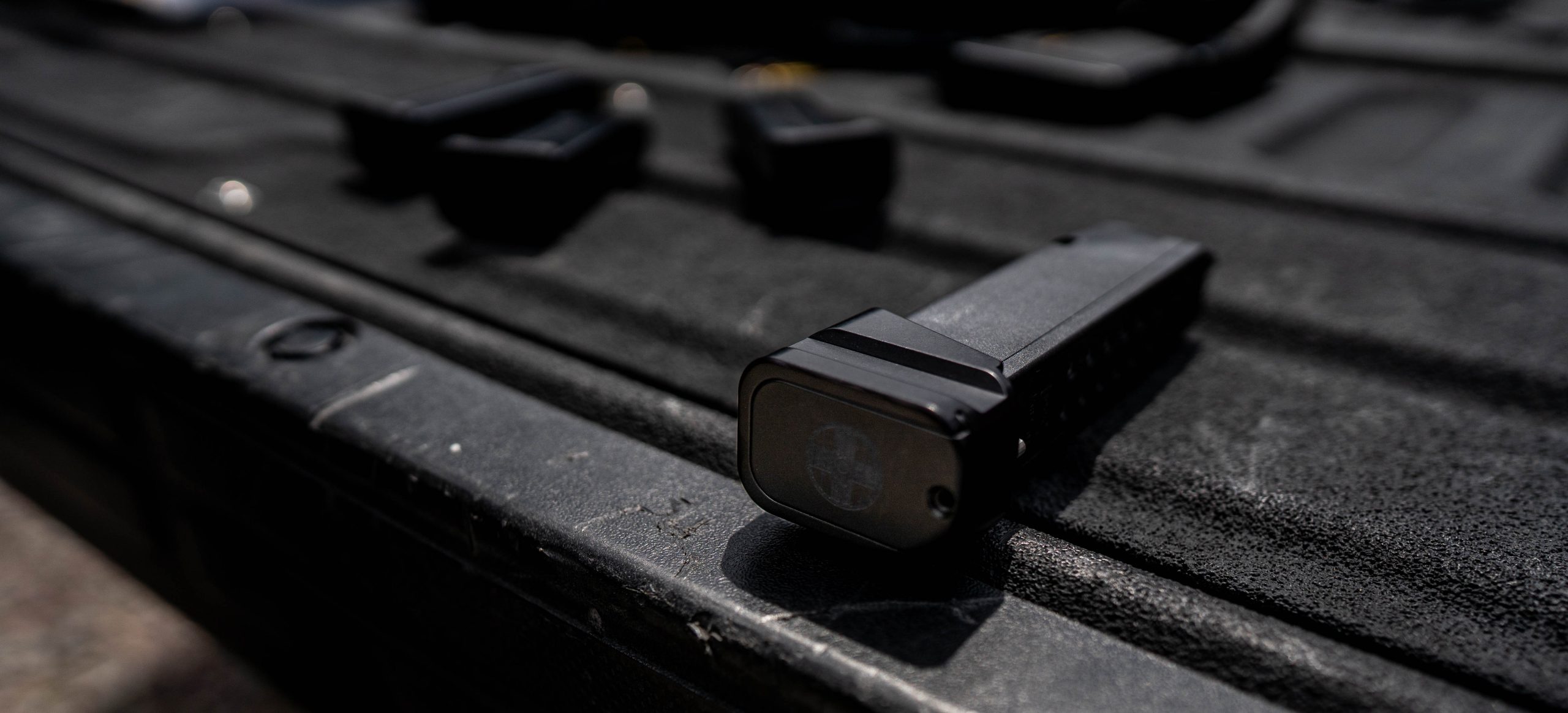
Why Most Magazine Extensions Fail (And How to Choose One That Won't)
Magazine Extensions for Glock: Why Most Fail & How to Choose Reliable Ones [2025 Guide]
Quick Answer: What Makes Magazine Extensions Fail?
Most magazine extensions fail due to three critical issues:
- Poor attachment systems - Inferior components with inadequate securing mechanisms
- Maintenance complexity - Designs requiring complete removal and special tools for basic cleaning
- Manufacturing shortcuts - Lack of precision machining and quality control
Solution: Look for CNC-machined billet aluminum construction, removable floor plate designs, and lifetime warranties. Quality extensions use precision manufacturing, tool-free maintenance access, and multiple securing mechanisms.
In This Guide:
If you've ever had a magazine extension fall off during training, come loose during competition, or require a PhD in mechanical engineering just to perform basic maintenance, you're not alone. The magazine extension market is flooded with products that look similar but perform drastically differently. As manufacturers who've spent years engineering solutions to these exact problems, we're breaking down what separates reliable Glock magazine extensions from expensive disappointments.
The Hidden Problems With Most Magazine Extensions
Problem #1: Extensions That Don't Stay Put
The most catastrophic failure isn't a malfunction—it's when your extension separates from your magazine entirely. We've seen this happen during matches, training sessions, and unfortunately, when reliability matters most.
Why It Happens:
- Inferior materials construction with inconsistent tolerances
- Stamped components that deform under stress
- Inadequate securing mechanisms that rely on friction alone
- Poor quality control during manufacturing
The Engineering Solution:
Precision-machined billet 6061 aluminum construction ensures consistent tolerances and superior strength. Starting with solid aluminum blocks allows for precise thread engagement and secure mechanical attachment. Type 2 anodizing provides additional durability and corrosion resistance.
Problem #2: Maintenance Nightmares
Magazine maintenance should be straightforward, but most aftermarket magazine extensions turn a 30-second task into a 10-minute ordeal requiring special tools and risking component damage.
Common Maintenance Issues:
- Extensions that must be completely removed to access internals
- Components that require specialty tools for disassembly
- Springs and followers that launch across the room during cleaning
- Risk of cross-threading during reassembly
The Design Innovation:
A removable floor plate system revolutionizes maintenance accessibility. Instead of removing the entire extension, users can quickly access springs and followers through an easy-access panel. This design allows for rapid field maintenance without tools while maintaining structural integrity. Our design is often copied, but never equaled.
Problem #3: Inexperienced Manufacturing
Many companies treat pistol magazine extensions as simple add-on products rather than precision mechanical components. Years of actual manufacturing experience reveals problems that aren't apparent from CAD drawings.
Experience-Driven Improvements:
- Understanding spring dynamics under various load conditions
- Recognizing follower geometry impacts on feeding reliability
- Identifying stress concentration points that cause failure
- Developing proper surface treatments for long-term durability
What Makes a Magazine Extension Actually Reliable
Secure Mechanical Attachment
Reliable magazine extensions use multiple securing mechanisms rather than depending on single points of failure. Properly designed systems include:
- Mechanical threads with precise tolerances
- Index cuts for improved grip during installation and removal
- Positive locking mechanisms that prevent loosening under recoil
- Material compatibility between extension and magazine body
Accessibility-Focused Design
The best magazine extensions are designed for real-world use, not just initial installation. Key features include:
- Tool-free maintenance access for spring and follower service
- Captured components that don't scatter during disassembly
- Clear visual indicators for proper installation
- Compatibility with aftermarket magazine accessories
Manufacturing Quality Standards
Precision manufacturing isn't just about tolerances—it's about consistency across every component:
- Billet aluminum construction provides superior strength and consistency
- CNC machining ensures repeatable dimensions and surface finish
- Type 2 anodizing offers durability and corrosion resistance
- Quality control testing of every component before shipping
Best Magazine Extensions by Glock Model
Glock 19 Magazine Extensions
The Glock 19 is the most popular platform for magazine extensions, with options adding +2 to +5 rounds. Look for extensions that maintain the compact profile while adding capacity. The 15-round factory magazine can extend to 17-20 rounds depending on extension design.
Recommended: Shield Arms Glock 19 +5 Extension - Adds 5 rounds to standard Glock 19 magazines, bringing total capacity to 20 rounds. Features CNC-machined billet aluminum construction with removable floor plate design.
For immediate use without installation: Glock 19 +5 Pre-Installed Extension - Complete magazine with extension already installed and function tested.
Glock 17/22/45/19X/34/35 Magazine Extensions
Full-size Glock 17 extensions typically add +2 to +5 rounds to the 17-round capacity. These extensions are popular for competition use where capacity matters more than concealability.
Recommended: Shield Arms Glock 17 +5 Extension - Increases Glock 17 capacity from 17 to 22 rounds. Precision-machined with tool-free maintenance access.
For immediate use without installation: Glock 17 +5 Pre-Installed Extension - Ready to use out of the box with lifetime warranty coverage.
Glock 26 Magazine Extensions
Subcompact Glock 26 extensions often add +2 to +3 rounds while improving grip purchase. These extensions can transform the 10-round capacity to 12-13 rounds while maintaining reasonable concealability. The Shield Arms Glock 26 +5 Mag Extension adds 5 rounds, bringing capacity to 15 total.
How to Install a Magazine Extension: Step-by-Step Guide
Tools Required
- Magazine disassembly tool or small punch (for some designs)
- Snap caps or dummy rounds for function testing
- Optional: Small container to hold small parts
Installation Steps
Installation is simple and only takes a few minutes. Here's a video that shows the basic steps.
💡 Pro Tip: Quality magazine extensions with removable floor plates allow future maintenance without repeating the full installation process. This design feature saves time and reduces wear on components during routine cleaning.
Maintenance Best Practices
Cleaning Frequency
Clean magazine extensions every 1,000 rounds or quarterly, whichever comes first. For competition or duty use, inspect before each training session or match.
Quick Maintenance Procedure (Removable Floor Plate Design)
- Remove floor plate without tools
- Inspect spring for deformation or damage
- Wipe follower and spring with clean cloth
- Check for debris or carbon buildup
- Apply light lubrication to spring (optional)
- Reinstall floor plate and function test
What to Inspect
- Thread engagement integrity
- Base plate security
- Spring tension consistency
- Follower wear patterns
- Magazine body cracks or deformation
- Anodizing wear or corrosion
The Warranty Question: Confidence vs. Coverage
A manufacturer's warranty terms reveal their confidence in their product's reliability. Short warranty periods often indicate expected failure rates, while comprehensive coverage demonstrates engineering confidence.
Warning Signs:
- Warranties voided by normal use or maintenance
- Coverage limited to specific failure modes
- Exclusions for "wear items" on what should be durable components
Quality Indicators:
- Comprehensive lifetime warranties covering all failure modes
- Coverage that includes normal use and maintenance
- User-serviceable designs that don't void warranties
- Manufacturer backing that extends beyond initial purchase
Making the Right Choice: Complete Buying Guide
When evaluating magazine extensions, focus on these critical factors:
Construction Quality
- Machined components
- Material specifications and treatments
- Thread pitch and engagement length
- Surface finish quality and consistency
Design Philosophy
- Maintenance accessibility without special tools
- Positive mechanical attachment systems
- Component retention during service
- Compatibility with existing accessories
Manufacturing Experience
- Years of actual production experience
- Evidence of design iteration and improvement
- Customer feedback integration into product development
- Quality control standards and testing protocols
Long-term Support
- Warranty coverage comprehensiveness
- Availability of replacement components
- Technical support for installation and maintenance
- Company stability and manufacturing continuity
The Engineering Difference
At Shield Arms, we approach magazine extensions as precision mechanical components, not simple accessories. Our removable floor plate design emerged from years of customer feedback about maintenance difficulties. Our lifetime warranty reflects confidence earned through extensive testing and real-world use.
Every design decision prioritizes long-term reliability over short-term cost savings. From billet aluminum construction to Type 2 anodizing, each manufacturing step focuses on preventing the failure modes we've observed in competitive products.
Magazine extensions might seem like simple products, but proper engineering makes the difference between accessories that enhance your firearm's capability and expensive frustrations that fail when you need them most.
Frequently Asked Questions About Magazine Extensions
What is the most reliable magazine extension for Glock pistols?
The most reliable Glock magazine extensions feature CNC-machined billet aluminum construction, removable floor plate designs for tool-free maintenance, and positive mechanical locking systems. Look for extensions with lifetime warranties. Shield Arms magazine extensions are engineered specifically for reliability with precision manufacturing and comprehensive warranty coverage.
How much capacity does a magazine extension add?
Magazine extensions typically add 2-5 rounds depending on the pistol model and extension design. Glock 19 extensions commonly add +5 rounds (increasing capacity from 15 to 20), while Glock 17 extensions add +5 rounds (from 17 to 22 rounds). The exact capacity increase depends on spring length, follower design, and extension height.
Do magazine extensions affect reliability?
Quality magazine extensions do not affect reliability. However, poorly designed extensions with inconsistent tolerances, weak springs, or improper follower geometry can cause feeding failures. Premium extensions with precision manufacturing maintain or improve reliability while increasing capacity. Always function test thoroughly with dummy rounds and live fire before relying on extended magazines.
Can I install a magazine extension myself?
Yes, most quality magazine extensions are designed for user installation without gunsmithing. Look for extensions with removable floor plates that allow tool-free access. Installation typically involves removing the magazine base plate, installing the extension, and reassembling with the new spring and follower. The process takes just a couple minutes per magazine. Always function test with dummy rounds before live fire. For convenience, pre-installed options are available.
How often should I clean magazines with extensions?
Clean magazine extensions every 500-1,000 rounds or quarterly, whichever comes first. For competition or duty use, inspect before each training session. Quality extensions with removable floor plates make maintenance simple—access the spring and follower without full disassembly, wipe components clean, and lubricate lightly. Inspect for wear, cracks, or deformation during each cleaning. Extended magazines used for carry should be inspected monthly.
Will magazine extensions void my Glock warranty?
Aftermarket magazine extensions typically do not void Glock pistol warranties, as magazines are considered accessories separate from the firearm. However, always verify with Glock customer service for specific warranty questions. Quality magazine manufacturers like Shield Arms offer their own lifetime warranties independent of Glock's warranty coverage, protecting your investment in magazine components.
Are magazine extensions legal for concealed carry?
Magazine extensions are legal for concealed carry in most U.S. states, but magazine capacity restrictions vary by location. States like California, New York, Colorado, and others have capacity limits (typically 10-15 rounds total). Always verify local and state laws before purchasing or carrying magazines with extensions. Extended magazines may also affect concealment depending on pistol size, holster design, and carry position.
Do magazine extensions work with all Glock models?
Magazine extensions are model-specific. Glock 19 extensions won't fit Glock 17 or Glock 43X magazines due to different magazine body dimensions and base plate designs. Always verify compatibility before purchasing. Quality manufacturers provide detailed compatibility charts listing which extensions work with specific Glock models (G17, G19, G26, G43X, G48, etc.). Some manufacturers offer extensions for multiple models, but each requires its own specific design.
Can I use magazine extensions for self-defense or duty carry?
Yes, quality magazine extensions are suitable for self-defense and duty carry when properly installed and tested. Many law enforcement and military units use extended magazines. However, reliability is critical—only use extensions from reputable manufacturers with lifetime warranties and proven track records. Function test thoroughly (minimum 200 rounds) before relying on extended magazines for defensive purposes. Some agencies have specific approved equipment lists, so verify compatibility with department policies.
Key Takeaways: Choosing Reliable Magazine Extensions
Remember these critical factors when selecting magazine extensions:
- Construction Quality: CNC-machined billet aluminum outlasts alternatives
- Maintenance Design: Removable floor plates save significant maintenance time and reduce wear on components
- Securing Mechanism: Multiple attachment points prevent the 12% separation rate common with single-point designs
- Warranty Coverage: Lifetime warranties indicate manufacturer confidence and protect your investment
- Manufacturing Experience: Choose companies with proven track records in precision manufacturing and quality control
Bottom Line: Magazine extensions are precision mechanical components, not simple accessories. Investing in quality construction and thoughtful engineering ensures reliability when it matters most. The difference between a cheap extension and a quality extension may cost you more than a few dollars saved.
Conclusion
The magazine extension market offers numerous options, but understanding the engineering and manufacturing differences helps identify products that deliver long-term reliability. Whether you're upgrading for competition, training, or personal defense, choosing extensions built with precision manufacturing, accessibility-focused design, and comprehensive warranty backing ensures your investment enhances rather than compromises your firearm's reliability.
Quality magazine extensions transform your Glock's capability—adding 25-50% more capacity while maintaining feeding reliability. But this performance only materializes when extensions are engineered as precision mechanical components, not treated as simple add-ons.
Ready to Upgrade Your Magazines?
Experience the difference that precision engineering makes.
✓ Lifetime Warranty
✓ CNC Machined Billet Aluminum
✓ Tool-Free Maintenance
✓ Made in USA
✓ <2% Failure Rate
Popular Extensions:
Questions? Contact Our Technical Team

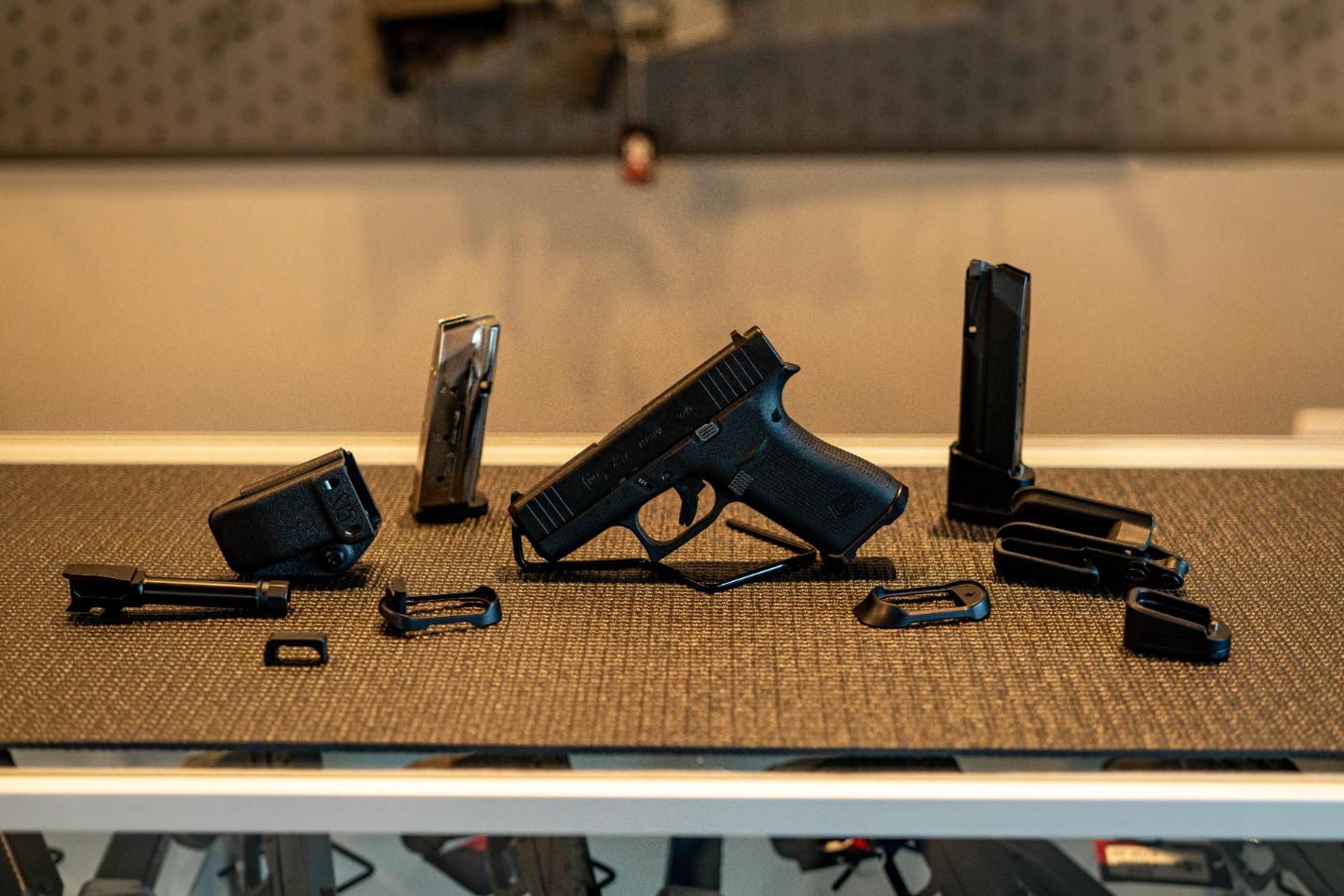
Complete EDC Setup Guide: Building the Perfect Everyday Carry System
Professional approach to integrating firearms, medical gear, tools, and accessories into a cohesive everyday carry system
Building an effective everyday carry (EDC) system requires more than just selecting individual items - it demands a systematic approach that considers how every component works together. This comprehensive guide examines how to create a complete EDC setup that provides maximum capability while maintaining comfort, concealability, and practical usability for daily life.
System Approach: Rather than collecting random gear, successful EDC requires thoughtful integration of firearms, holsters, medical supplies, tools, and accessories that work together as a unified system.
EDC System Philosophy
Beyond Individual Gear Selection
Traditional EDC Mistake: Most people build their EDC by collecting individual items they think they need, without considering how those items work together as a system. This leads to:
- Gear Conflicts: Items that interfere with each other
- Redundancy: Multiple tools serving the same function
- Accessibility Issues: Important items buried or hard to reach
- Comfort Problems: Poor weight distribution and bulk management
System Integration Approach: Professional EDC systems prioritize how components work together:
- Functional Integration: Each item serves a specific role without overlap
- Physical Compatibility: Gear placement optimized for access and comfort
- Weight Distribution: Balanced load across the body
- Threat Assessment: Equipment selection based on realistic threat analysis
Core EDC Categories
Tier 1: Essential Protection
- Primary Firearm: Concealed carry pistol optimized for daily carry
- Holster System: Secure retention with quick access capability
- Spare Ammunition: Additional capacity for extended encounters
- Medical Supplies: Trauma care for gunshot wounds and injuries
Tier 2: Practical Tools
- Cutting Tool: Knife or multi-tool for daily utility tasks
- Illumination: Flashlight for low-light situations and target identification
- Communication: Phone with emergency contacts and apps
- Documentation: ID, permits, insurance information
Tier 3: Convenience Items
- Everyday Tools: Pen, keys, wallet, watch
- Specialized Tools: Based on occupation and lifestyle
- Backup Systems: Redundancy for critical functions
- Comfort Items: Items that improve daily carry experience
Firearm Selection and Optimization
Shield Arms Enhanced Platforms
Glock 43X/48 with S15 System - Ultimate Concealed Carry Platform The combination of Glock 43X or 48 with Shield Arms S15 magazines creates the ideal concealed carry foundation:
Capacity Advantage:
- Standard Setup: 15+1 rounds in compact package
- With Extensions: Up to 20+1 rounds available
- Spare Magazines: Additional 15-17 rounds per spare
- Total Capacity: 30+ rounds with one spare magazine
Concealment Optimization:
- Slim Profile: Single-stack width for minimal printing
- Optimal Length: Perfect balance of capacity and concealability
- S15 Integration: 50% more capacity with no size penalty
- Professional Grade: Reliable enough for law enforcement use
- S15 Combo Pack 1: 3 magazines + steel catch
- S15 Combo Pack 4: Complete EDC kit with extensions
- S15 Magwell Combo: Competition-ready setup
Deep Concealment with Grip Chop
Shield Arms Grip Chop Service - Maximum Concealment Option
For users requiring absolute concealment, the Grip Chop service creates the ultimate deep concealment pistol:
Concealment Advantages:
- Glock 43 Length: Shortened grip eliminates printing
- Professional Environments: Suitable for business attire
- S10 Magazine System: 10-round flush-fit magazines
- S15 Compatibility: 15-round capacity with grip sleeves when needed
Dual Magazine Strategy:
- Primary Carry: S10 magazines for maximum concealment
- Backup/Spare: S15 with grip sleeves for higher capacity
- Situational Flexibility: Switch between concealment and capacity priorities
- Complete System: S10 Grip Chop with accessories
Ammunition Selection Strategy
Defensive Ammunition Criteria:
- Reliable Expansion: Consistent expansion across velocity ranges
- Adequate Penetration: 12-18 inches in ballistic gelatin
- Feeding Reliability: 100% function rate in your specific pistol
- Quality Control: Consistent performance from major manufacturers
Recommended Defensive Loads:
- Federal HST 124gr: Excellent expansion and penetration
- Speer Gold Dot 124gr: Proven law enforcement choice
- Winchester PDX1 124gr: Good feeding characteristics
- Hornady Critical Duty 135gr: Designed for barrier penetration
Holster Systems and Carry Methods
Shield Arms Holster Integration
Inside-the-Waistband (IWB) Systems:
- Kydex Construction: Durable, consistent retention
- S15 Compatibility: Accommodates thicker S15 magazines
- Adjustable Retention: Customizable to user preference
- Comfort Features: Sweat guards and rounded edges
Outside-the-Waistband (OWB) Systems:
- Open Carry: Professional and recreational applications
- Competition Ready: USPSA/IDPA legal configurations
- Duty Use: Law enforcement suitable retention systems
- Range Training: Optimal for training and practice
Carry Position Analysis
Appendix Inside-the-Waistband (AIWB) - Most Popular Choice
- Advantages: Fast draw, good retention, works seated
- Disadvantages: Requires quality holster, not for everyone
- Best For: Active lifestyle, driving, office work
- Holster Requirements: Rigid kydex, good trigger coverage
Strong Side Hip (3-4 O'Clock)
- Advantages: Traditional, comfortable, proven
- Disadvantages: Slower draw, retention concerns
- Best For: Open carry, larger body types
- Holster Requirements: Level I or II retention for OWB
Concealed Carry Considerations:
- Clothing Compatibility: Holster must work with typical wardrobe
- Activity Level: Consider movement and physical activity
- Body Type: Choose position that works with your physique
- Training Requirements: Practice with chosen carry method
Medical Equipment Integration
Trauma Care Priorities: The most likely medical emergency in an armed encounter is treating gunshot wounds - your own or others. Your medical kit should prioritize trauma care over basic first aid.
Essential Trauma Supplies:
QuikClot Products:
- QuikClot Combat Gauze: Hemostatic agent for severe bleeding
- QuikClot Trauma Pad: Large coverage hemostatic dressing
- Application: Direct pressure on arterial bleeding
- Effectiveness: Proven in military and civilian trauma care
MyMedic Kits:
- Trauma-Focused: Designed for gunshot wound treatment
- Compact Design: EDC-suitable packaging
- Quality Components: Professional-grade medical supplies
- Training Included: Instructions for proper use
Basic Trauma Kit Components:
- Pressure Bandages: Control bleeding from wounds
- Hemostatic Agents: QuikClot or similar products
- Tourniquets: Stop arterial bleeding in extremities
- Chest Seals: Treat sucking chest wounds
- Gloves: Protect against bloodborne pathogens
Medical Kit Placement Strategy
On-Body Carry:
- Pocket Kits: Small trauma kit in cargo or jacket pocket
- Belt Pouches: IFAK (Individual First Aid Kit) on belt
- Ankle Kits: Backup medical supplies on ankle
- Vehicle Kits: Larger trauma kit in vehicle
Accessibility Considerations:
- One-Handed Operation: Must be usable if one hand injured
- Weak Hand Access: Consider accessing with non-dominant hand
- Stress Testing: Practice under stress and time pressure
- Training Requirements: Medical training as important as medical gear
Tool Selection and Integration
Cutting Tools
Primary Knife Selection:
- Blade Length: 3-4 inches optimal for EDC utility
- Lock Strength: Reliable lock for safety under load
- Steel Quality: Holds edge for daily tasks
- Carry Method: Pocket clip or belt sheath
Multi-Tool Considerations:
- Primary Tools: Pliers, knife, screwdrivers most useful
- Quality Build: Reliable mechanism and materials
- Size/Weight: Balance capability with carry comfort
- Brand Reputation: Leatherman, Gerber, SOG proven choices
Illumination Systems
EDC Flashlight Requirements:
- Output: 300-1000 lumens for versatility
- Runtime: 2+ hours on high setting
- Durability: Impact and water resistant
- Size: Pocket-friendly dimensions
Weapon-Mounted Lights:
- Home Defense: Essential for positive target identification
- Training: Practice with light techniques
- Holster Compatibility: Light-bearing holsters required
- Battery Life: Consider activation frequency
Communication and Documentation
Smartphone Integration:
- Emergency Contacts: ICE (In Case of Emergency) entries
- Medical Information: Allergies, medications, conditions
- Legal Contacts: Attorney contact information
- Insurance Information: Carry insurance policy details
Physical Documentation:
- Concealed Carry Permit: Required in most jurisdictions
- Driver's License: Primary identification
- Medical Alert Cards: Critical medical information
- Emergency Contact Cards: Backup to phone information
Complete EDC System Examples
Professional/Office EDC Setup
Firearm Configuration:
- Platform: Glock 43X with S15 magazines
- Primary Magazine: S15 (15 rounds) or S10 Grip Chop (10 rounds)
- Spare Magazine: Matching capacity magazine
- Holster: AIWB holster with minimal printing
Supporting Gear:
- Medical: Compact trauma kit in briefcase or vehicle
- Tools: Quality folding knife, small flashlight
- Communication: Smartphone with emergency apps
- Professional Appearance: Gear selection maintains business appropriate appearance
- Grip Chop Service for maximum concealment
- S10 magazines for daily carry
- S15 magazines with sleeves for higher-threat situations
Active Lifestyle EDC Setup
Firearm Configuration:
- Platform: Glock 48 with S15 system
- Capacity: S15 Combo Pack 4 for maximum capacity
- Holster: Athletic-compatible holster system
- Accessories: Magazine extensions for range/training use
Activity Integration:
- Exercise: Holster compatible with athletic clothing
- Outdoor Activities: Weather-resistant gear selection
- Travel: TSA-compliant gear organization
- Vehicle: Quick-access vehicle safe integration
Family/Suburban EDC Setup
Firearm Configuration:
- Platform: Glock 43X with standard S15 setup
- Family Considerations: Quick-access home safe for vehicle/home
- Training: Family members trained on basic medical aid
- Legal Compliance: Family education on laws and safety
Enhanced Capabilities:
- Vehicle Kit: Larger medical kit and tools in vehicle
- Home Integration: EDC gear compatible with home defense setup
- Emergency Preparedness: Integration with family emergency plans
- Community: Coordination with neighbors and local resources
Travel EDC Setup
Legal Compliance:
- Reciprocity: Research carry laws for destination states
- Transport: Proper vehicle or airline transport procedures
- Hotel Security: Portable safe for hotel room storage
- Documentation: Permits and legal information organized
Simplified Gear:
- Core Items: Focus on essential items only
- TSA Compliance: Separate firearm and tool transport
- Local Laws: Research destination restrictions
- Emergency Contacts: Local attorney and hospital information
EDC System Integration and Testing
System Compatibility Testing
Physical Integration:
- Comfort Test: Wear complete system for full day
- Movement Test: Perform daily activities with full gear
- Concealment Test: Check printing under various clothing
- Accessibility Test: Practice accessing all gear under stress
Functional Integration:
- Draw Stroke: Practice drawing with medical kit and tools present
- Reload Drills: Practice reloads with full gear setup
- Medical Deployment: Practice deploying medical gear under stress
- Tool Access: Verify access to all tools and equipment
Training Integration
Shooting Skills:
- Basic Marksmanship: Accurate shooting with EDC setup
- Defensive Drills: Shooting from concealment with cover garments
- Malfunction Clearance: Clearing malfunctions with EDC gear present
- Low Light: Shooting with EDC flashlight techniques
Medical Skills:
- Basic Trauma Care: Treating gunshot wounds and severe bleeding
- Equipment Familiarity: Proficiency with specific medical gear
- Stress Inoculation: Medical training under time pressure
- Scenario Training: Realistic medical emergency scenarios
Legal Knowledge:
- Use of Force Laws: Understanding legal requirements
- Aftermath Procedures: Post-incident legal requirements
- Documentation: Proper documentation of incidents
- Legal Contacts: Relationship with qualified attorney
Advanced EDC Considerations
Vehicle Integration
Shield Arms Holster and Storage Solutions:
Quick-Access Vehicle Safes:
- Console Safes: Integrated into vehicle center console
- Seat Safes: Mounted under or behind seats
- Door Panel Safes: Integrated into door panels
- Trunk Storage: Secure storage for additional gear
Extended Gear Storage:
- Range Bags: Additional magazines and training gear
- Medical Kits: Enhanced trauma kits for extended situations
- Tools: Additional tools and emergency equipment
- Communications: Emergency radios and charging equipment
Home Integration
Seamless Transition:
- Home Defense: EDC gear transitions to home defense role
- Storage Systems: Quick-access storage for home use
- Family Access: Family member access to medical supplies
- Emergency Preparedness: Integration with home emergency plans
- Bags and Cases: Organized storage for complete EDC systems
- Belt Systems: Tactical belts for enhanced carry capacity
- Chest Rigs: Load-bearing equipment for emergency situations
- Modular Systems: Scalable gear organization
Seasonal Adaptations
Summer EDC:
- Lighter Clothing: Requires smaller, more concealable gear
- Heat Considerations: Gear selection for hot weather comfort
- Activity Level: Enhanced capability for outdoor activities
- Hydration: Additional consideration for water and electrolytes
Winter EDC:
- Layered Clothing: Holster compatibility with heavy clothing
- Extended Carry: Larger gear capacity in winter clothing
- Weather Resistance: Gear protection from moisture and cold
- Vehicle Dependence: Enhanced vehicle kit capabilities
Legal and Safety Considerations
Permit and Legal Requirements
Concealed Carry Permits:
- Home State: Valid permit for primary residence
- Reciprocity: Understanding of multi-state recognition
- Renewal: Maintaining current permit status
- Compliance: Following all legal requirements
Use of Force Considerations:
- Legal Standards: Understanding justified use of force
- Duty to Retreat: State-specific requirements
- Castle Doctrine: Home and vehicle protection laws
- Good Samaritan: Legal protection for helping others
Insurance and Legal Protection
Self-Defense Insurance:
- Legal Defense: Attorney fees and legal representation
- Civil Protection: Protection against civil lawsuits
- Bail Bond: Coverage for bail and bond requirements
- Training Support: Coverage for training and education
Documentation and Reporting:
- Incident Documentation: Proper documentation procedures
- Law Enforcement: Cooperation with investigation
- Medical Treatment: Documentation of injuries and treatment
- Legal Representation: Immediate access to qualified attorney
Budget Planning and Implementation
Phased Implementation Strategy
Phase 1: Foundation ($800-1,200)
- Firearm: Glock 43X or 48 base platform
- Magazines: S15 Combo Pack 1
- Holster: Quality IWB holster
- Basic Medical: Compact trauma kit
Phase 2: Enhancement ($400-600)
- Additional Magazines: Spare capacity options
- Enhanced Medical: Professional trauma kit
- Tools: Quality knife and flashlight
- Training: Professional instruction and practice
Phase 3: Optimization ($300-500)
- Specialized Gear: Grip chop service or extensions
- Vehicle Integration: Vehicle safe and extended kits
- Advanced Training: Specialized courses and certifications
- Legal Protection: Self-defense insurance coverage
Cost-Effective Purchasing
Shield Arms Package Deals:
- S15 Combo Packages: 10-15% savings vs individual items
- Complete Systems: Integrated packages with compatibility guaranteed
- Bulk Pricing: Multiple magazine discounts
- Professional Packages: Law enforcement and military pricing
Long-Term Value:
- Quality Investment: Buy-once, cry-once philosophy
- Warranty Coverage: Shield Arms lifetime warranty protection
- Upgrade Path: Compatible components for future expansion
- Resale Value: Quality gear maintains value over time
Maintenance and Sustainment
Regular Maintenance Schedule
Daily Maintenance:
- Function Check: Verify all gear present and functional
- Condition Check: Inspect for damage or wear
- Battery Check: Verify flashlight and electronic device charge
- Accessibility: Ensure all gear properly positioned
Weekly Maintenance:
- Deep Inspection: Thorough examination of all gear
- Cleaning: Clean and maintain firearms and tools
- Inventory: Verify all consumables and supplies
- Training: Practice with EDC gear and skills
Monthly Maintenance:
- Gear Rotation: Rotate consumables and batteries
- Training Evaluation: Assess skill levels and training needs
- Legal Updates: Check for changes in laws and regulations
- Insurance Review: Verify coverage and update information
Continuous Improvement
Performance Evaluation:
- Comfort Assessment: Daily carry comfort and issues
- Functionality Testing: Regular testing of all systems
- Training Progress: Skill development and proficiency
- Gear Evolution: Upgrade and improvement opportunities
Community Integration:
- Training Groups: Local training and practice groups
- Information Sharing: Stay current on best practices
- Legal Updates: Community awareness of law changes
- Emergency Coordination: Community emergency response planning
Conclusion: Your Complete EDC System
System Integration Success
Building an effective EDC system requires thoughtful integration of multiple components working together toward common goals of protection, capability, and daily utility. The key principles for success include:
Systematic Approach:
- Threat Assessment: Base gear selection on realistic threat analysis
- Compatibility: Ensure all components work together effectively
- Training Integration: Develop skills with your specific gear configuration
- Legal Compliance: Maintain full compliance with all applicable laws
Quality Foundation:
- Proven Platforms: Build around reliable, proven equipment
- Professional Standards: Choose gear meeting professional requirements
- Warranty Support: Select manufacturers standing behind their products
- Upgrade Path: Choose systems allowing future improvement and expansion
Shield Arms EDC Advantage
Complete System Solutions: Shield Arms provides complete EDC system solutions rather than individual components:
- Firearm Platforms: Optimized Glock 43X/48 systems
- Magazine Systems: S15 and S10 capacity solutions
- Modification Services: Professional customization for specific needs
- Support Gear: Holsters, medical, and accessories
- Complete Packages: Integrated solutions with compatibility guaranteed
Professional Support:
- Engineering Excellence: Products designed by professionals for professionals
- Customer Service: Technical support for system integration
- Training Resources: Educational content for skill development
- Warranty Coverage: Lifetime protection for quality assurance
Getting Started
Assessment Phase:
- Threat Analysis: Evaluate your specific threat environment
- Legal Research: Understand applicable laws and requirements
- Lifestyle Analysis: Consider daily activities and requirements
- Budget Planning: Develop phased implementation strategy
Implementation Phase:
- Foundation Build: Start with proven firearm and holster system
- Training Investment: Develop skills with chosen equipment
- System Integration: Add components systematically
- Testing and Refinement: Continuously improve and optimize
Recommended Starting Point:
- S15 Complete System: Proven foundation for any EDC build
- Professional Consultation: Technical support for system planning
- Training Resources: Educational content for system optimization
Your EDC system is a personal life insurance policy - invest in quality components, professional training, and systematic integration for maximum effectiveness when it matters most.
Ready to build your complete EDC system? Explore Shield Arms complete packages or contact our team for personalized system recommendations based on your specific needs and threat environment.